When Your Favorite Shows Look Even Better: What is HDR10+?
Hook 'Em In: Is Your TV Hiding Something Amazing?
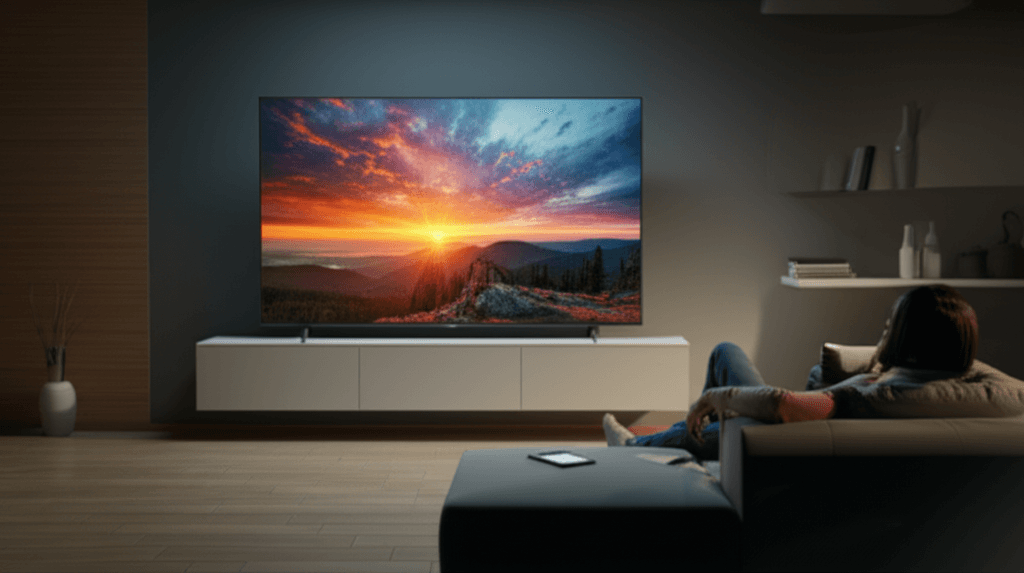
Picture this: You’re snuggled on the couch, lost in a movie, when suddenly a scene flashes across the screen that feels so real, you could almost step into it. Maybe it’s a sunset bursting with more colors than you ever imagined, or a shadowy corner of a room revealing tiny details you’ve never noticed before [2]. It’s that "wow" moment that makes you lean forward, completely hooked.
We often think of our TVs as just screens, but modern televisions are far more powerful than many of us realize [3]. They’re actually hiding a secret superpower, ready to unlock the full visual richness of your favorite shows and movies [1]. We’re talking about HDR10+, a behind-the-scenes hero that makes your entertainment incredibly stunning, often without you even knowing it’s there [4], [1]. It’s all about bringing that incredible, cinema-quality picture right into your living room, making your favorite content truly pop [5].
So, What's the Big Deal with "High Dynamic Range"?
Beyond "More Pixels": It's About Better Pixels
When people talk about how good a TV picture looks, you often hear about "resolution" – like 4K. That simply means how many tiny dots, called pixels, make up the entire picture on your screen. More pixels usually mean a sharper, more detailed image [8]. But here’s the cool part: High Dynamic Range (HDR) isn't about adding more pixels; it’s about making each of those pixels better [7], [8].
Think of it like upgrading from a simple crayon drawing to a vibrant, detailed oil painting [9]. The subject might be the same, but the richness, depth, and lifelike quality are vastly different [9]. HDR makes your picture more realistic and vibrant, bringing it closer to what your eyes naturally see in the real world [0], [7].
The Magic of Light and Dark
At its heart, HDR lets your TV show a much wider range between the brightest brights and the darkest darks, all at the same time [6], [11]. Imagine looking out a window on a bright, sunny day [12]. You can clearly see the details in the fluffy clouds and the subtle shadows under a tree in your yard [12]. Older TVs struggled with this; they’d either make the bright sky a washed-out white blob or turn the shadows into indistinct black patches [12]. HDR, however, can handle both extremes beautifully [12].
This means sunlit scenes won't look washed out, and shadowy scenes won't just be big black blobs [13]. Instead, you’ll see intricate details in both, from the texture of a dark brick wall to the individual rays of a dazzling sunbeam [ref:ref:13].
HDR10+ vs. The Rest: Smarter Picture, Scene by Scene
The "Static" Storyteller (Basic HDR)
Early versions of HDR, like standard HDR10, were a great start. They set a general "look" for the entire movie or show from beginning to end [15], [16]. It's essentially a "one-size-fits-all" approach to brightness and contrast for the whole program [16].
Think of it like a photographer using the exact same camera settings for every single shot, whether they’re capturing a bright outdoor scene or a dimly lit indoor portrait [17]. It works, and it’s better than no special settings at all, but it isn't always perfect for every single moment [17]. A very bright scene and a very dark scene would get the same overall treatment, potentially losing details in either extreme [14], [16].
The "Dynamic" Director (Enter HDR10+)
Now, let’s talk about HDR10+. This is where things get really smart [18], [19]. HDR10+ is a more intelligent version of HDR because it allows your TV to adjust the picture scene by scene, or even frame by frame [19]. This incredible precision is thanks to something called "dynamic metadata," which acts like a continuous stream of instructions for your TV [0], [18].
Imagine that smart photographer again, but this time, they adjust their camera settings for every new scene – a bright beach, a dim cave, a twilight city [20]. This gives you the absolute best possible picture for that specific moment, ensuring everything looks its absolute best [20].
The benefit? This dynamic tuning makes every scene look its absolute best, without you having to touch any settings [21]. Brighter scenes get brighter where needed, dark scenes retain their mood and reveal hidden details, all automatically [21].
Why Should You Care? The Real-World Benefits in Your Living Room
Movies and TV Shows Pop Like Never Before
With HDR10+, your favorite streaming content can look incredibly realistic, truly bringing the director's original vision to life [22], [23], [24]. Explosions have more intense, dazzling light, night scenes show more subtle details in the shadows, and colors are richer and more lifelike [25]. Imagine a vibrant sunset with smooth color gradients, the realistic sheen on a car, or the intricate textures in a dark alley [25].
Major streaming services like Amazon Prime Video, Hulu, Apple TV+, and Paramount+ offer content in HDR10+. Even Netflix and Disney+ are rolling out HDR10+ support, meaning a vast library of your favorite shows and movies can now take advantage of these enhanced visuals [0], [24].
A "Future-Proof" Advantage (Mostly!)
Many new TVs and streaming devices already support HDR10+, so you might already have this tech in your living room or be getting it soon [26], [27]. It's a step towards getting the best possible picture quality from the content you're already paying for, unlocking visual richness that might have been hidden before [28].
No Extra Work for You
The real beauty of HDR10+ is that it works automatically [29], [30]. If your TV and the content both support it, you just press play and enjoy the enhanced visuals [30]. No fiddling with settings, no complex menus – just a consistently optimized picture [29], [30]. Some advanced TVs even use light sensors to adjust the picture based on the ambient light in your room, ensuring a great viewing experience whether it's day or night [0], [29].
The Catch? What You Need to Enjoy HDR10+
It's a Team Effort
For HDR10+ to work its magic, it's a team effort [32]. You need three things working together seamlessly [33]:
- A compatible TV: Your television needs to specifically support HDR10+. Most newer smart TVs from brands like Samsung (a key developer of HDR10+), Panasonic, Hisense, and TCL include this [31], [33].
- Compatible content: The movies, shows, or games you're watching need to be encoded with HDR10+. As mentioned, streaming services like Amazon Prime Video, Hulu, Apple TV+, and now Disney+ and Netflix offer a growing library of this content [31], [33]. You can also find it on some Ultra HD Blu-ray discs [31].
- A compatible streaming device/player: If you're not using your TV's built-in apps, your streaming stick, gaming console, or Blu-ray player also needs to support HDR10+ to send that special dynamic information to your TV [31], [33].
The good news is that many modern setups already have this synergy, often without users even realizing it [34].
Not All HDR is Created Equal (Quick Nod to Competition)
While HDR10+ is fantastic, it's worth a quick mention that it has a competitor called Dolby Vision [35], [36]. Both aim for similar goals – making your picture smarter and more dynamic, scene by scene – but they use slightly different "languages" to do so [36].
The good news for you? Many TVs support both HDR10+ and Dolby Vision, so it's less of a worry for consumers [37]. The main point is having some form of dynamic HDR, which means scene-by-scene picture optimization, will give you a significantly better viewing experience than basic HDR [37].
What This Means for You: Enjoying the Visual Feast
HDR10+ isn't just a tech buzzword; it's a behind-the-scenes upgrade that makes your entertainment experience significantly more immersive and beautiful [38], [39]. It’s about making colors richer, contrasts sharper, and details clearer, all without you having to do anything [39]. From over a billion colors to smarter adjustments for every scene, it's like having a dedicated lighting director for your TV [38].
Next time you're watching a show and a scene just pops with incredible visual depth – whether it’s the dazzling intensity of an explosion, the subtle details in a dark night scene, or the vibrant hues of a sunset – there's a good chance technologies like HDR10+ are working their magic [40].
So, sit back, relax, and let your TV show you what it's truly capable of [41]. The future of stunning home entertainment is already here, delivering a visual feast right to your living room [41]!