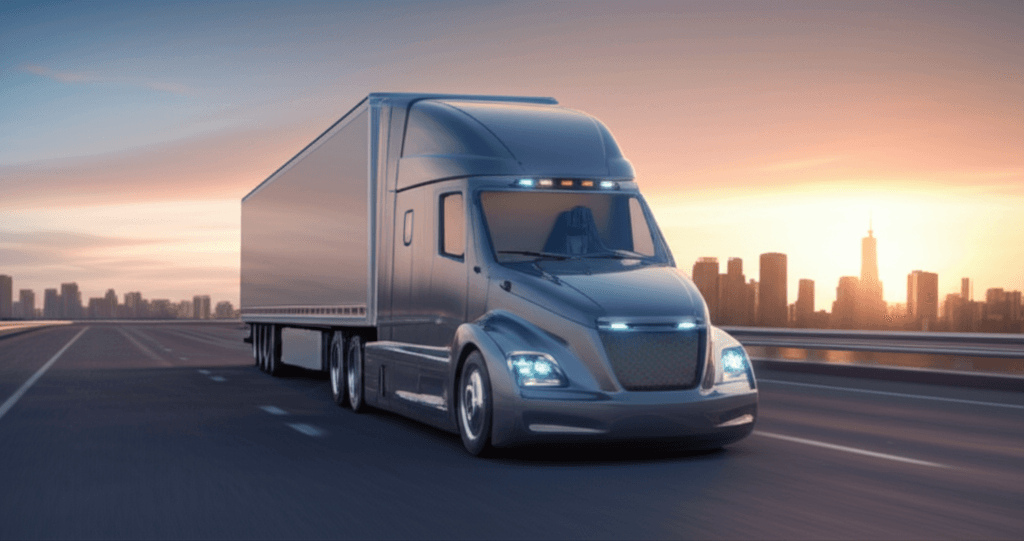
Self-Driving Trucks: Will Your Next Delivery Be from a Robot Driver?
Hook 'Em In: The Future is Rolling Your Way
Imagine this: You've just ordered something online, and it's on its way to you in a massive truck. But there's a twist – there's no one in the driver's seat. The truck is cruising silently down the highway, all on its own. Sounds like something straight out of a futuristic movie, right? [2]
Well, get ready, because this isn't just a fantasy anymore! Self-driving trucks are already being tested, and some are even making real commercial deliveries today [0], [1], [3]. Companies like Aurora are already running driverless trucks on public roads in Texas, tackling routes between major cities like Dallas and Houston, and Fort Worth and El Paso [2], [3]. This amazing technology is much closer to becoming an everyday sight than most people realize.
So, why should you care about these "robot drivers"? It's not just about cool new tech. This shift means big changes for our roads, how quickly your online orders arrive, and even the price of your groceries. In fact, autonomous trucks could cut operating costs for trucking companies by nearly half, potentially boosting the U.S. economy by an estimated $1.2 trillion [4]. Let's dive in and explore what these robot drivers could mean for all of us.
What Exactly Are These "Robot Trucks" Anyway?
These aren't just trucks with fancy cruise control. While your car's cruise control simply keeps a steady speed, self-driving trucks are far more advanced. Think of it like a super-smart brain controlling the truck, constantly watching the road, other vehicles, and making complex decisions in real-time [6]. This "brain" gathers information from many different "senses" to understand the world around the truck and make driving decisions, often faster and more consistently than a human can [6].
How do these trucks "see" the world? They use a complex network of cameras (like your phone's eyes), radar (which works like a bat's echolocation), lidar (which uses lasers to map everything around them), and powerful computers that process all this information [5], [7]. Imagine a truck wearing multiple pairs of glasses, always looking in every direction, with a super-smart navigator constantly telling it exactly what to do [8].
Here’s a closer look at those "super-senses":
- Cameras: These are the truck's "eyes," capturing visual information to spot lane markings, traffic signs, and other vehicles [0], [7], [8].
- Radar: Similar to how a submarine uses sound waves, radar uses radio waves to detect objects and measure their speed, even in challenging conditions like fog or heavy rain [0], [7], [8].
- LiDAR: This stands for "Light Detection and Ranging." It shoots out laser beams to create a detailed 3D map of the surroundings, measuring distances to objects with incredible precision [0], [7], [8].
- Powerful Computers: All this information is fed into powerful onboard computers – the truck's "brain." These computers use artificial intelligence (AI) to analyze the data and make real-time decisions about speed, lane changes, and braking [0], [5], [7], [8].
Just like some cars have assisted parking, self-driving trucks are starting with "co-pilots" that assist human drivers, gradually moving towards fully autonomous vehicles in specific areas (like long highway stretches). It's a journey, not an overnight switch [9]. The industry uses different "levels" to describe how much a vehicle can drive itself, from Level 0 (no automation) to Level 5 (full automation). Most self-driving trucks currently being tested are aiming for Level 3 or 4, meaning the truck can handle most driving tasks on its own, at least under certain conditions [5], [9].
Why Are We Building Robot Drivers? The Big Picture
So, why are we putting robots behind the wheel of these massive rigs? There are some very compelling reasons:
- Making Roads Safer: Human error is a huge cause of accidents, contributing to over 90% of crashes involving large trucks [11], [12]. Robot drivers don't get tired, distracted by phones, or drive aggressively [11]. They are programmed to follow speed limits, maintain safe distances, and drive predictably [11]. This could significantly reduce the number of truck-related accidents, making highways safer for everyone [12].
- Faster Deliveries, Fresher Goods: Human drivers are limited by federal rules to 11 hours of driving within a 14-hour period [13]. Self-driving trucks, however, can potentially drive for much longer hours with fewer breaks, operating almost continuously [13]. This means goods can move faster across the country. Your online orders could arrive quicker, and fresh produce could get to your grocery store sooner, staying fresh for longer [13], [14].
- Solving a Trucking Shortage: The trucking industry faces a significant shortage of human drivers, with over 80,000 drivers needed in the U.S. by 2024, a number projected to double by 2030 [0], [1], [10], [15]. Autonomous trucks could help fill this gap and keep supply chains moving efficiently, preventing empty shelves and frustrating delays [15].
- Fuel Efficiency and Less Traffic: Optimized driving by AI can lead to smoother acceleration and braking, saving fuel [16]. Also, "platooning" – where trucks drive closely together in a convoy – could significantly reduce wind resistance for the trucks following, leading to substantial fuel savings (up to 10-16% for trailing trucks) and potentially less traffic congestion [0], [16].
The Bumps in the Road: Challenges and Concerns
While the potential benefits are exciting, there are still some significant challenges and concerns for self-driving trucks to overcome:
- Safety First (and Second, and Third): Before they become widespread, these trucks need to be proven incredibly safe in all conditions – rain, snow, and unexpected road hazards [17], [18]. A big question is: How do they handle unpredictable human drivers or emergencies on the road? Developers are working hard on this, training AI to respond to emergency vehicles, tire blowouts, and even safely pull over if conditions become too dangerous [18], [19].
- Jobs and the Human Element: What happens to the millions of truck drivers? This is a major concern, as the U.S. alone has over 3.5 million truck drivers [17], [20]. While long-haul driving might change, many experts believe it will be a transformation of jobs rather than mass job loss. New roles in remote monitoring, maintenance, and local deliveries could emerge, such as "teleoperations" specialists who remotely oversee trucks, or technicians who maintain the complex systems [ref:ref:ref-21].
- Legal Labyrinths and Ethical Dilemmas: Who is responsible if an autonomous truck gets into an accident? This is a complex legal question, potentially involving the truck manufacturer, software developer, or fleet owner [17], [22]. Even more challenging is a scenario often called the "trolley problem": If a truck has to choose between two bad outcomes (like swerving to avoid a pedestrian but hitting a barrier), how is that decision programmed? This is a profound ethical question that engineers and policymakers are grappling with, as different cultures might have different ideas about the "right" answer [17], [22], [23].
What This Means for Your Everyday Life
These robot drivers will likely touch your life in several ways:
- Cheaper (or at least stable) Prices: Transportation costs are a big part of the price of almost everything you buy. If goods can be transported more efficiently, with lower labor and fuel costs, it could help keep down the costs of everything from electronics to your morning coffee [4], [25].
- A Different View of the Highway: You might start seeing more trucks with no visible driver, especially on long stretches of highway [24], [26]. Companies like Aurora are already running regular driverless customer deliveries on routes in Texas [26].
- The "Last Mile" Still Needs You (for now): Don't expect a robot truck to back into your driveway with your Amazon package just yet [24], [27]. Human drivers will likely handle the complex city routes and final deliveries for a long time. The "last mile" – getting the package from a local distribution center to your door – is the most expensive and tricky part of delivery, requiring human judgment for navigating busy streets, dealing with pedestrians, and providing customer service [27].
- An Evolving Landscape: This isn't an overnight switch. We'll see a gradual rollout, with human drivers and robot drivers sharing the road for years to come [24], [28]. Many companies are using a "hub-to-hub" model, where autonomous trucks handle the long highway stretches, and human drivers take over for the more complex urban areas [28].
The Road Ahead: Are We Ready for Robot Drivers?
Self-driving trucks are more than just a novelty; they represent a significant shift in how goods move across our world [29], [30]. The global autonomous truck market is projected to grow significantly, from $35.51 billion in 2024 to $76 billion by 2032 [31].
So, keep your eyes on the road (and the news)! This technology is rapidly advancing, and its impact will touch everything from the economy to road safety [29], [31]. Autonomous trucks don't get tired or distracted, potentially saving thousands of lives annually by reducing accidents caused by human error [31].
While you might not see a robot delivering your package tomorrow, the journey for your goods on the highway just might be steered by a silent, tireless co-pilot [32]. The future of delivery is definitely on the move!