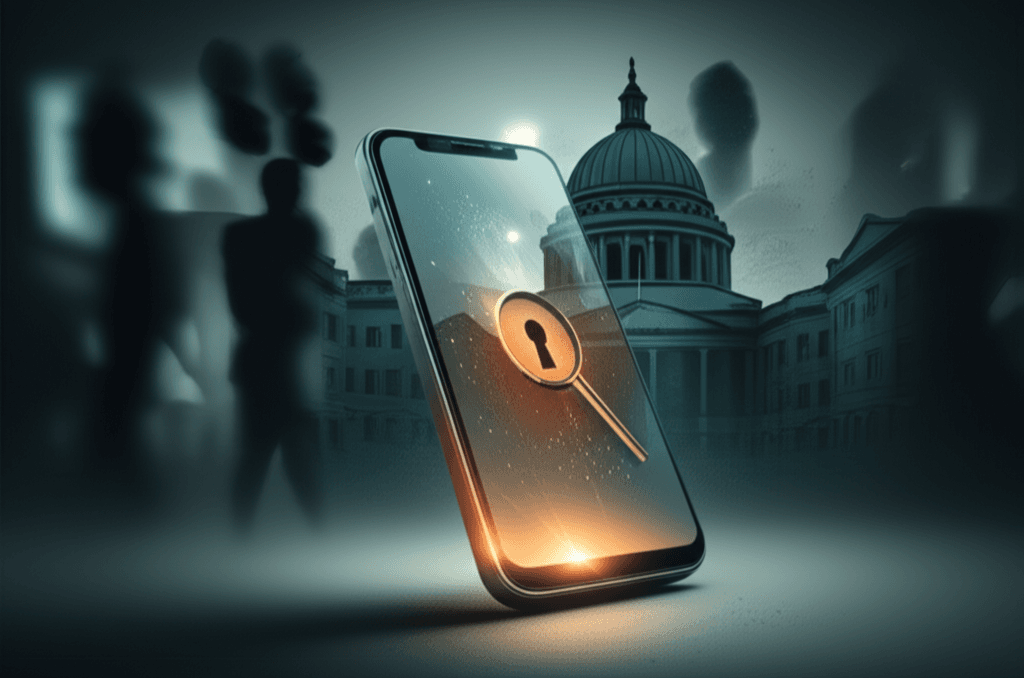
Your Phone, a Secret Agent? The Truth About How Governments Access Your Data
Ever wonder if your smartphone truly keeps your secrets safe? You lock your phone, you think it's secure, but is it really? [2] It's a question that can feel a bit unsettling, especially when you consider how much of our lives are now stored on these powerful little devices.
The Digital Doorway: Is Your Smartphone Keeping Secrets?
Imagine your phone as your most personal diary, photo album, and travel log all rolled into one. It holds your conversations, your cherished memories, your daily routines, and even your thoughts (through your searches and notes) [31]. You might naturally assume that once it's locked with a passcode or your fingerprint, your digital life is completely private.
The surprising truth is that even your super-secure, locked phone isn't entirely off-limits to powerful entities like governments and law enforcement [3]. They have various methods to access the data on these devices, often under specific legal circumstances [3].
Why does this matter to you? This isn't just about spies or high-stakes criminal investigations. It's about your everyday life: your photos, your messages, your location, and every app you use [4]. For most of us, privacy isn't about hiding something illegal; it's about having control over our personal information and feeling secure in our digital spaces. This whole situation is a constant balancing act between protecting your privacy and ensuring public safety [4].
Cracking the Code: How Governments Get In
So, how exactly do governments get past your phone's digital defenses? It's not always through secret hacking. They have a few different "doors" they can use.
The "Front Door" - Your Consent
Sometimes, the easiest way in is if you, often unknowingly, give permission. This is like voluntarily handing over your house keys [7].
This can happen in a couple of ways:
- App Permissions: Every time you download a new app, it asks for permissions – like access to your location, photos, or microphone. You quickly tap "Allow" to use the app, but you might not realize you're giving away more access than you intend [6]. Buried in those lengthy terms and conditions, which most of us don't read, might be clauses that allow the app to collect and even share your data with others [6]. Government agencies have been known to buy this commercially available location data from data brokers, completely bypassing the need for a warrant [1], [6].
- Handing Over Your Device: At U.S. borders, Customs and Border Protection (CBP) officers can search your electronic devices, including phones, without a warrant or even suspicion of a crime [0], [6]. While you can refuse to unlock your device, it might lead to delays or even seizure of your phone [6]. Similarly, if you're stopped by police and voluntarily unlock your phone and hand it over, you've given them consent to search it [6].
The "Back Door" - Legal Orders
Even if you don't give direct consent, governments can get legal orders to compel tech companies (like Apple, Google, or Meta) to provide data they hold about you [8]. Think of these companies as the "landlords" of your digital data [8].
- Warrants: A warrant is like a special "permission slip" from a judge [8]. For law enforcement to get a warrant, they usually need to show "probable cause" – a strong, believable reason to think a crime has been committed and that your data will provide evidence [9]. Warrants are generally required for accessing the content of your communications, like recent emails or text messages [8]. For example, if police are investigating a crime and believe your messages contain evidence, they can get a warrant for those specific messages from your service provider [9].
- Subpoenas: A subpoena is also a legal order, but it's a less strict "request slip" [8]. It often doesn't require "probable cause," just that the data is "relevant to an ongoing investigation" [8]. Subpoenas are often used for things like phone records (who you called and when, but not what was said) or older emails [8].
- Cloud Data: If you back up your photos, documents, or messages to services like Apple iCloud or Google Drive, these companies hold that data. With a warrant, they can be compelled to provide access to those backups [8]. Globally, government requests for user data from tech companies have increased significantly, with companies complying in a high percentage of cases [8]. Often, these requests come with "gag orders," meaning the company is legally forbidden from telling you that your information has been requested [8].
The "Secret Passage" - Exploiting Weaknesses
This is where it gets really tricky and can feel a bit like a spy movie. Sometimes, governments don't need a key or a legal order; they find a "secret passage" [10].
Imagine a super-skilled locksmith who finds a tiny flaw in even the strongest lock. They don't need a key; they just pick it [11]. In the digital world, these flaws are called "zero-day vulnerabilities" – security weaknesses in software that even the company that made it doesn't know about yet [10], [11]. "Zero-day" means the vendor has had "zero days" to fix it [5].
Governments can buy or develop "zero-day exploits" – special tools that take advantage of these unknown flaws to bypass your phone's lock screen and extract data directly from the device itself [10], [11]. Specialized tools like GrayKey and Cellebrite are used by law enforcement agencies to do just this. GrayKey, for example, is a small box that can connect to iPhones and, after some time, display the passcode, allowing full access [10]. Cellebrite offers similar tools that can extract vast amounts of data, including deleted information, from many mobile devices [10].
Recent news stories have highlighted this, like the famous San Bernardino iPhone case in 2016 [12]. The FBI ultimately paid over $1.3 million to a third party to unlock the iPhone of one of the shooters after Apple refused to create a "backdoor" [12]. This shows that even strongly encrypted iPhones can be accessed through these specialized methods [3], [12].
The Great Balancing Act: Security vs. Safety
This whole situation creates a big dilemma, like a seesaw trying to find balance.
The "Good Guy" Perspective: Why Access is Sometimes Needed
Governments often argue that access to phone data is a necessary tool for maintaining public safety and national security [14], [13]. It's not always about snooping on innocent people, but about fighting serious threats like violent crime, terrorism, and child exploitation [14].
For example, phone data can be crucial in time-sensitive situations, like tracking down a kidnapper [15]. Law enforcement can use cell tower information to estimate a phone's location, or even get a "geofence warrant" to see all devices that were in a specific area at a particular time [14], [15]. This can help them find victims or identify suspects [14], [15]. The Department of Homeland Security (DHS), for instance, actively fights child exploitation and has developed tools to help identify victims and apprehend perpetrators [14].
The "Privacy Defender" Perspective: The Slippery Slope
Privacy advocates, however, raise serious concerns. They worry about a "slippery slope" – where a seemingly small, reasonable step towards data collection can lead to increasingly intrusive actions, ultimately resulting in a significant loss of privacy [16].
- Potential for Abuse: If governments have too much power to access devices, could it be misused? What about targeting political dissidents or simply casting too wide a net [17]? Mass surveillance programs, like Section 702 of the Foreign Intelligence Surveillance Act (FISA), can sweep up communications of ordinary Americans even when targeting foreign individuals [0], [17]. The FBI has even used this data to search for information on protesters [5], [17]. Historically, surveillance has been abused to target civil rights movements and journalists [17].
- Erosion of Trust: If people feel their devices aren't secure and their data can be easily accessed, it erodes trust in technology and digital services [18]. This isn't just a feeling; it changes how people act online. Many people feel they lack control over their data and might avoid expressing controversial opinions online due to fear of scrutiny, a phenomenon called the "chilling effect" [4], [18]. This can even lead people to stop using online brands or hesitate to adopt new smart devices [18].
The Tech Companies' Role
Companies like Apple and Google are caught in the middle. They want to protect user privacy and build secure products, but they also have legal obligations to comply with government requests [19]. This dilemma often leads to legal battles, like Apple's refusal to create a "backdoor" for the FBI in the San Bernardino case [19]. While some companies fight warrants, others comply, with major tech companies complying with a high percentage of government requests for user information [19].
What This Means for YOU: Practical Steps and What to Watch For
Understanding how governments can access your phone data is the first step. While you can't be completely invisible in the digital age, you can be informed and proactive to protect your "digital self" [31].
Understanding Your Digital Footprint
Every app, every photo, every message leaves a trace – this is your "digital footprint" [21]. It's like a trail of breadcrumbs you leave online [21]. This footprint is permanent and traceable; even "deleted" content can linger in backups or on servers [21]. Be mindful of what you share and where you store it. Your phone constantly collects data, including your location, contacts, and app usage, and much of this can paint a detailed picture of your life [1], [21].
Basic Security Habits
Adopting a few simple habits can make a big difference:
- Strong Passwords/Biometrics: Don't skip the basics! While Face ID or Touch ID offer convenience, a strong alphanumeric passcode is still crucial [23]. Your passcode is your "master key" and often the only way to get in under certain circumstances [23]. In the U.S., law enforcement can often compel you to unlock your phone with biometrics but typically cannot compel you to reveal your alphanumeric passcode, offering an extra layer of legal protection [23].
- Software Updates: Regularly update your phone's operating system and apps [24]. These updates are like digital repairs that patch security vulnerabilities and close those "secret passages" that hackers or governments could exploit [24]. Unpatched vulnerabilities are a major cause of data breaches [24].
- App Permissions: Be careful what access you grant to apps (location, camera, microphone) [25]. A flashlight app doesn't need access to your contacts or microphone! Review which apps have access to your sensitive data and disable permissions that aren't essential [25]. Many apps collect and sell your location data to brokers, which governments can then purchase, bypassing warrant requirements [20].
Cloud vs. Local Data
There's a big difference between data stored on your device ("local data") and data stored online ("cloud data") [26]. Data in the cloud (like Google Photos or iCloud) is often easier for governments to get with a warrant than data stored only on your device [26]. This is because cloud data is held by a third-party company, and law enforcement can go directly to that provider with a legal order [26]. The U.S. CLOUD Act even clarifies that U.S. companies must provide data, even if stored overseas, in response to a warrant [26].
The Future of Phone Security
The world of phone security is a continuous "cat-and-mouse game" [27]. As phone manufacturers enhance security, those trying to bypass it find new methods. Phones are likely to become more secure with hardware-based security chips and advanced biometrics [27]. However, new threats like quantum computing could challenge current encryption methods in the future [27]. The battle for your digital privacy will continue to evolve.
The Big Picture: Your Digital Rights in a Connected World
This isn't a solved problem. It's an ongoing debate between privacy, security, and law enforcement needs [29]. The "Crypto Wars" of the 1990s are back, now with far more personal data at stake [29].
As a digital citizen, you have a crucial role in this conversation [30]. Be aware of how your data is used, understand your rights (which are your existing human rights applied to the digital realm) [28], and support policies that strike a reasonable balance [30]. Many people feel they lack control over their data, but advocating for stronger privacy regulations is vital [30].
Your phone is an extension of you [31]. Understanding how it can be accessed is key to protecting your digital self. While you can't be completely invisible in our hyper-connected world, you can be informed and proactive [31].